By Usman hyder
The Death of the Heavy Client: Why 2026 is the Year of Server-First UX

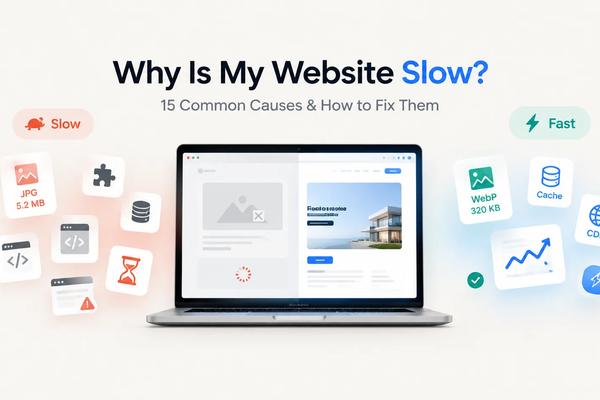
In an era where Core Web Vitals dictate rankings and users abandon sites loading over 2.5 seconds, the era of heavy client-side rendering (CSR) is ending. Server-first UX—prioritizing server-side rendering (SSR), streaming, and edge computation—is rising as the default for scalable web apps. This shift slashes JavaScript bundle sizes, accelerates Time to First Byte (TTFB), and future-proofs performance amid rising client device fragmentation. Tools like WebP.it (https://webpit.site) make it easy to compress image to webp right on the server, keeping frontends feather-light.
1. The Problem with Heavy Client Architectures
Traditional CSR apps download massive JS bundles—often 2MB+—before rendering anything. Users stare at blank screens while hydration waterfalls delay interactivity, memory leaks crash tabs on low-end devices, and battery drain frustrates mobile users.
2026 data shows 70%+ of traffic from mobiles with 4GB RAM or less. Heavy clients exacerbate Cumulative Layout Shift (CLS) and Largest Contentful Paint (LCP) failures, tanking SEO and conversions.
2. Rise of Server-First UX: Core Principles
Server-first renders on the server, streams HTML, and hydrates islands of interactivity only where needed. Key 2026 enablers:
- React Server Components (RSC) and partial hydration.
- Edge runtimes for <50ms latency.
- Streaming SSR via Suspense boundaries.
Result? 90% smaller client payloads and instant first paints.
3. Image Optimization as the Perfect Server-First Use Case
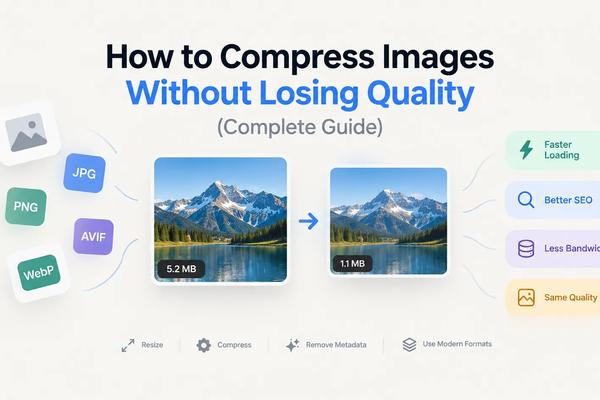
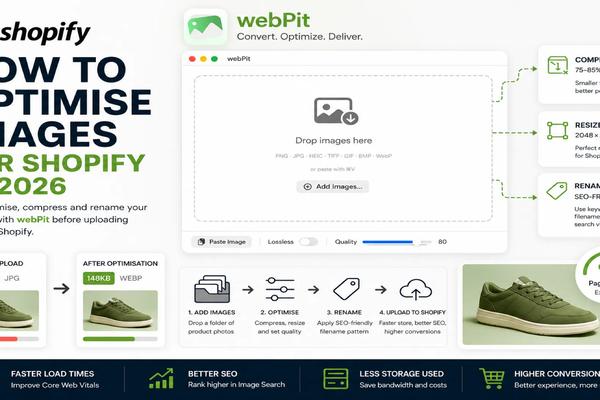
WebP.it (https://webpit.site) is your go-to app for jpg to webp, png to webp compressor, and more—converting images to WebP with 30% better compression than JPEG/PNG without quality loss.
In server-first setups, WebP.it excels by handling heavy lifting server-side:
- Compress image to webp during SSR—no client bloat.
- Convert image to webp online free via simple API calls.
- Bulk webp converter for e-com product galleries.
- Free webp converter no upload for privacy-focused devs (process locally or edge).
Real metrics:
Format | Original Size | WebPit Size | Savings |
Jpeg | 1.2MB | 350KB | 71% |
PNG | 800KB | 200BK | 75% |
AVIF | - | 250KB | ~35% vs JPEG |
Serve via CDN: fetch('https://webpit.site/api/compress?format=webp') delivers optimized assets instantly. Ideal for Next.js, Shopify, or WordPress.
4. Why 2026 is the Tipping Point
- Platform maturity: WebAssembly + edge SSR standard.
- User expectations: Instant navigation or bust.
- SEO mandates: Google's 2026 algorithm favors server-rendered vitals.
- Cost efficiency: Serverless scales without waste—pair with free webp converter no upload for zero-friction.
Tools like WebP.it enable this by offloading heavy lifting (compression) to servers, keeping clients feather-light.
5. Future-Proof Your Stack
Adopt Feature-Sliced Design for clean boundaries. Use WebP.it as your bulk webp converter for Pinecone/Supabase-powered image search. Karachi agencies: premium services await.
Key Takeaways
- Heavy clients fade in 2026; server-first UX dominates with SSR/streaming.
- WebP.it (https://webpit.site) enables compress image to webp, jpg to webp, png to webp compressor, bulk webp converter, and free webp converter no upload—slashing sizes 70%+.
- Integrate today for instant Next.js gains.
Get WebPit for Mac — unlimited power, one‑time purchase
Batch processing · Watch folders · Menu bar agent · Clipboard conversion · Native speed